
Story by Christian Given Magaling, Visual Communications Officer
For many people, turning on a faucet is an ordinary part of everyday life. In geographically isolated communities, however, access to clean water can mean the difference between hardship and opportunity. It can free families from hours spent meeting basic needs and give them more time for childcare, education, and livelihood.
For the Aeta community of Sitio Kaging in Barangay Sto. Niño, Bamban, Tarlac, water has long been more than a basic necessity. It was a daily challenge, a precious resource, and a responsibility shared by the entire community.
Today, the sound of flowing water carries a different meaning. It represents progress, resilience, and hope for a better future.
Among those experiencing this transformation is 25-year-old Sing David, a member of the Mag-Antsi Tribe. Her story reflects how sustained, community-centered support can create meaningful change for families living far from essential services and opportunities.
A Life Shaped by Perseverance
As a wife and mother of two, Sing spends much of her time caring for her family and helping meet their household’s needs. Like many parents, she dreams of giving her children a healthier and more secure future. For years, however, even securing the basics required extraordinary effort.
Before the Roots to Shoots (RTS) Program and its partners began working with the community, one of the family’s greatest challenges was access to water.
Residents depended entirely on a natural spring located far from the village. Reaching it required a walk of nearly 30 minutes each way. Families made the physically demanding journey every day, carrying home the water they needed for drinking, cooking, washing, and other household activities.
Because the spring was their only source of clean water, residents worked together to protect it from contamination. It sustained life in Sitio Kaging, and the community shared the responsibility of preserving it.
Still, every container of water came at a cost: time, energy, and physical strain. For mothers like Sing, that burden was felt every day.
Learning Beyond Survival
Limited access to water was not the only challenge facing families in Sitio Kaging.
Like many young mothers, Sing wanted the best for her children but had limited access to information and resources that could support their health and well-being. Providing nutritious meals was often difficult, particularly in a remote community where services and opportunities were not always within reach.
Through the Go Baby Go sessions under Roots to Shoots, Sing gained practical knowledge on childcare, nutrition, and healthy development. Home Gardening training also taught her how to grow vegetables in her own backyard, helping improve her family’s access to nutritious food.

Nagpapasalamat po kami sa Go Baby Go ng RTS. Doon po kami natutong mag-alaga nang maayos ng aming mga anak at kung paano magtanim sa sarili naming bakuran.
“We are grateful for the Go Baby Go sessions under RTS. Through the program, we learned how to care for our children properly and how to grow food in our own backyard.”
Families learned about balanced meals, the role of vegetables in children’s growth, and simple practices they could apply at home. While these lessons may appear modest, they helped households make better-informed decisions that could benefit their children for years to come.
For Sing, the knowledge gave her greater confidence as a mother. More than information, it gave her practical tools to help build a healthier future for her children.
Growing Opportunities at Home
As Roots to Shoots deepened its engagement with the community, its support expanded from health and nutrition to food security and livelihood development.
Through goat dispersal, participating families received livestock that could grow into a sustainable household asset and potential source of income. Residents also learned vegetable gardening techniques, allowing them to produce food in their own yards.
These interventions opened new possibilities for families that had long faced limited economic opportunities. Some residents established small sari-sari stores to supplement their income. Others began raising livestock and growing vegetables for household consumption, with the potential to sell surplus produce.
For Sing’s family, these changes strengthened both their daily nutrition and their ability to cope with uncertainty.
Before the program, the family often relied on root crops such as taro and cassava whenever rice was unavailable. Sing’s husband took on construction work to provide for their needs, but their resources were frequently stretched thin.
Today, the knowledge and skills they have gained are helping them make better use of what is available within their community.
Reflecting on the support they received, Sing shared:

Nagpapasalamat po ako sa kanila at sa lahat ng tumulong sa amin. Kung walang tutulong sa amin, paano na po kami? Sino po ang tutulong sa amin gayong napakalayo po ng aming lugar?
“I am grateful to them and to everyone who helped us. Without their support, what would happen to us? Who would reach us when our community is so far away?”
Her words speak to a reality experienced by many geographically isolated communities. Distance, difficult terrain, and limited infrastructure can prevent essential services and opportunities from reaching the people who need them most.
The Gift of Water
One of the most significant developments in Sitio Kaging is the establishment of a community water system through the partnership supporting the Roots to Shoots and Water, Sanitation, and Hygiene initiatives.
Water that once required long and exhausting walks is now more accessible to families.
The change can be felt throughout the community. Parents have more time to care for their families and pursue livelihood activities. Household chores can be completed more efficiently. Water is available to support home gardens and livestock.
For Sing, the water system is not merely a convenience. It has become an essential part of the future her family is working to build.
With reliable access to water, vegetables can grow more consistently, livestock can be cared for more effectively, and children can live in cleaner and healthier surroundings. Most importantly, families no longer face the same daily struggle that once shaped life in the community.
Sing also recognizes that access comes with responsibility.
Sa aming mga kasama, nandito na po ang tubig. Sana po ay mapangalagaan namin ito sa mahabang panahon.
“To everyone in our community, the water is now here. I hope we can take care of it so that it will serve us for many years.”
Her hope reflects the community’s shared commitment to protect the water system and sustain its benefits for future generations.
Residents remember the distance they once had to walk and the physical effort required to bring water home. They understand how important it is to ensure that this progress endures.
Dreams That Live On
Beyond improvements in water access, nutrition, and livelihood, Sing carries a deeply personal dream: to see a school established closer to their community.
Education holds special meaning for her. As a young woman, she hoped to complete her studies, but marrying at an early age prevented her from continuing her education.
Although her own journey unfolded differently from what she had imagined, her aspirations did not disappear. They now live on through her children.
Her greatest hope is for them to finish their education and gain access to opportunities she did not have.

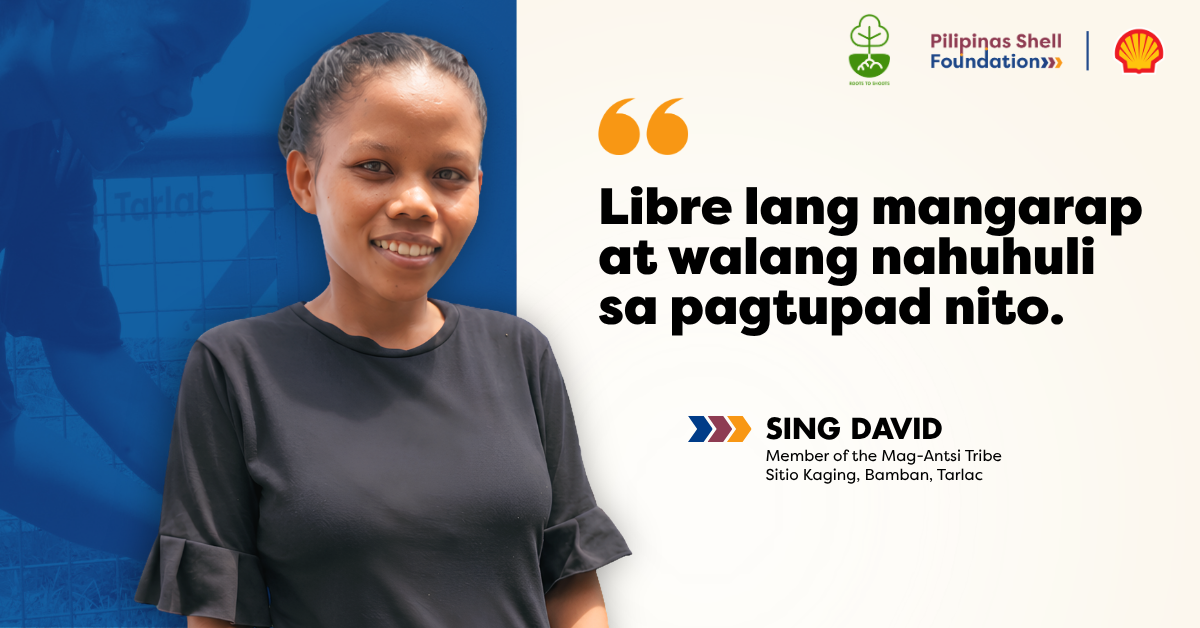
Libre naman ang pangarap, at wala pong nahuhuli sa pagtupad nito.
“Dreaming costs nothing, and it is never too late to pursue a dream.”
Her words carry both acceptance and determination. They acknowledge the circumstances that shaped her life while refusing to let the past define her family’s future.
For Sing, success is not measured by personal achievement alone. It is reflected in the opportunities her children will receive, the education they can attain, and the lives they will be able to create for themselves.
A Community Moving Forward
Reaching Sitio Kaging remains difficult. The roads leading to the community are still rough, with only portions paved and easily accessible.
Despite these challenges, partners and visitors continue to make the journey, bringing support, encouragement, and opportunities. For residents, every visit carries an important message: they have not been forgotten.
The progress experienced by Sing and her neighbors forms part of the six-month Roots to Shoots Light: Community Nutrition and Resilience Program. Implemented by Pilipinas Shell Foundation, Inc. (PSFI) with funding support from Thaison Builder and Developer, Inc. (TBDI), the program sought to improve child nutrition, strengthen household food security, and expand access to essential services and resources.
Through interventions in nutrition, water, sanitation and hygiene (WASH), livelihood development, and sustainable energy, RTS Light addressed the interconnected challenges affecting families in Sitio Kaging. Community members received support such as parenting and nutrition education, home gardening training, livestock, solar lighting units, and improved access to safe water.
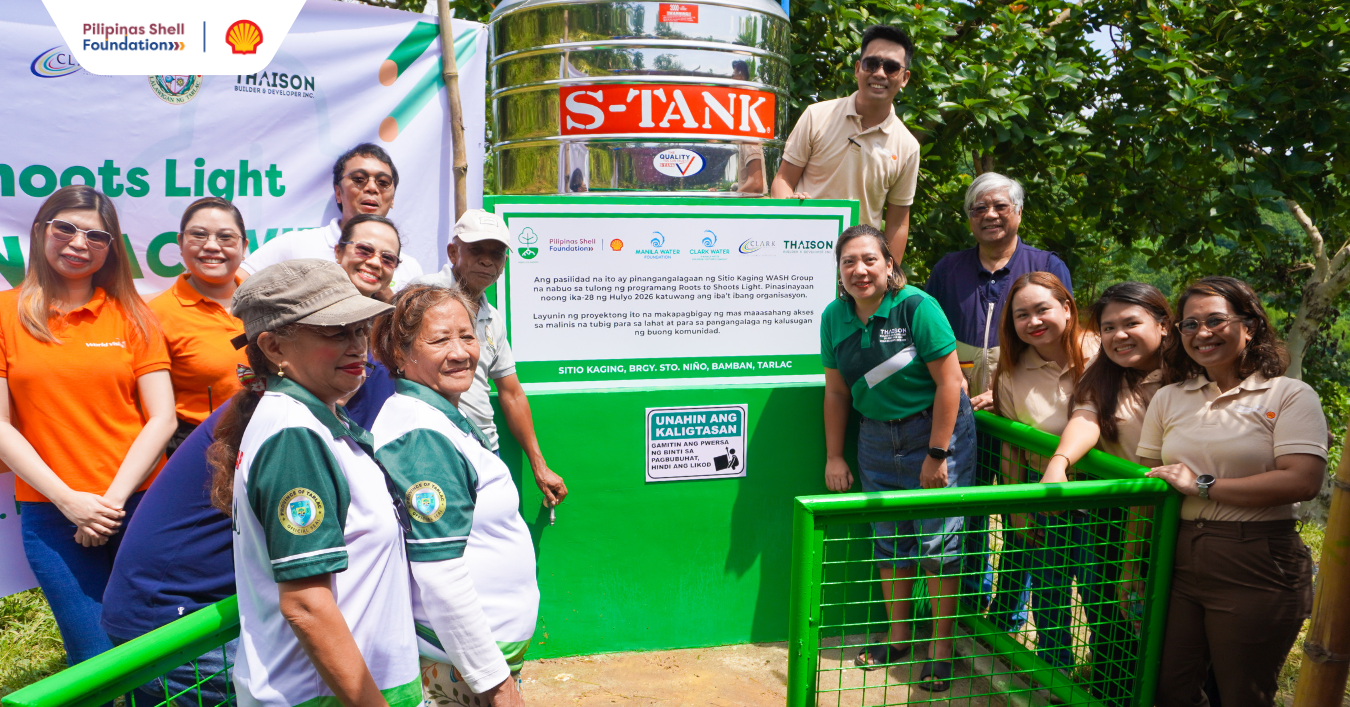
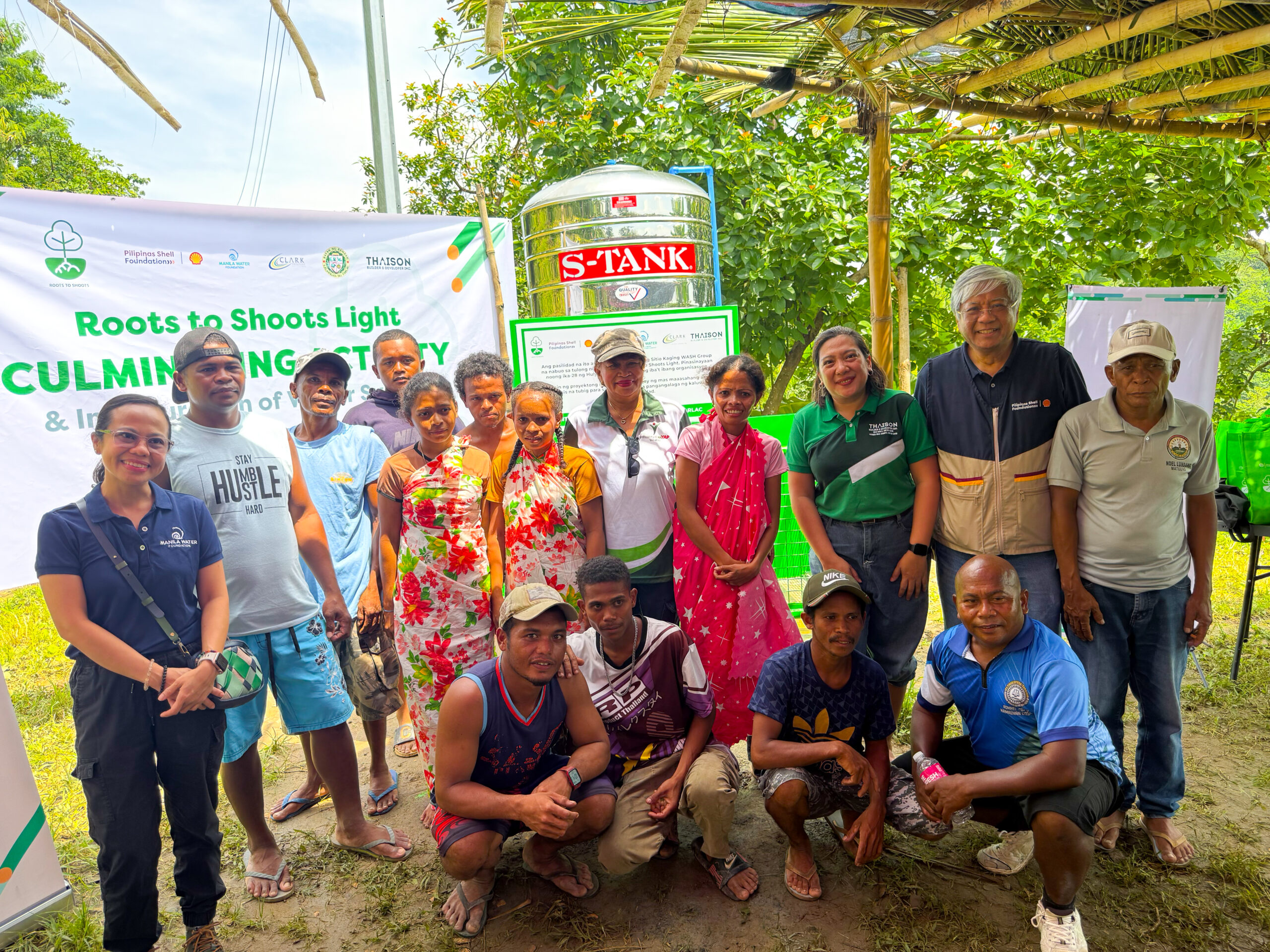
On July 28, 2026, residents, local leaders, and development partners gathered to mark the completion of RTS Light and inaugurate the community water system. The system now serves 36 families and benefits more than 120 individuals, bringing safe and dependable water closer to their homes.
The milestone was made possible through the collective efforts of the community, PSFI, Manila Water Foundation, World Vision Development Foundation, Thaison Builder and Developer, Inc., and the local government of Bamban. By bringing together their knowledge, resources, and expertise, the partners helped transform a long-held community aspiration into an everyday reality.

For Sing, the impact of these partnerships can be seen in the rhythms of daily life. Clean water is more accessible. Home gardens are growing. Livelihood opportunities are taking root. Parents are gaining knowledge and confidence, while children have a healthier environment in which to grow.
Sing warmly welcomes those who wish to visit and support Sitio Kaging. She remains grateful to God and to every organization and individual who has helped create new possibilities for her family and community.
Their story is a reminder that development is not only about infrastructure or resources. It is about helping people make everyday life safer, healthier, and more hopeful.
For Sing David and the people of Sitio Kaging, the water system is more than a source of clean water.
It is a symbol of possibility.
It is proof that progress can reach even the most geographically isolated communities.
Above all, it reflects what becomes possible when communities, government, civil society, and private sector partners work together to nurture hope, one family at a time.