

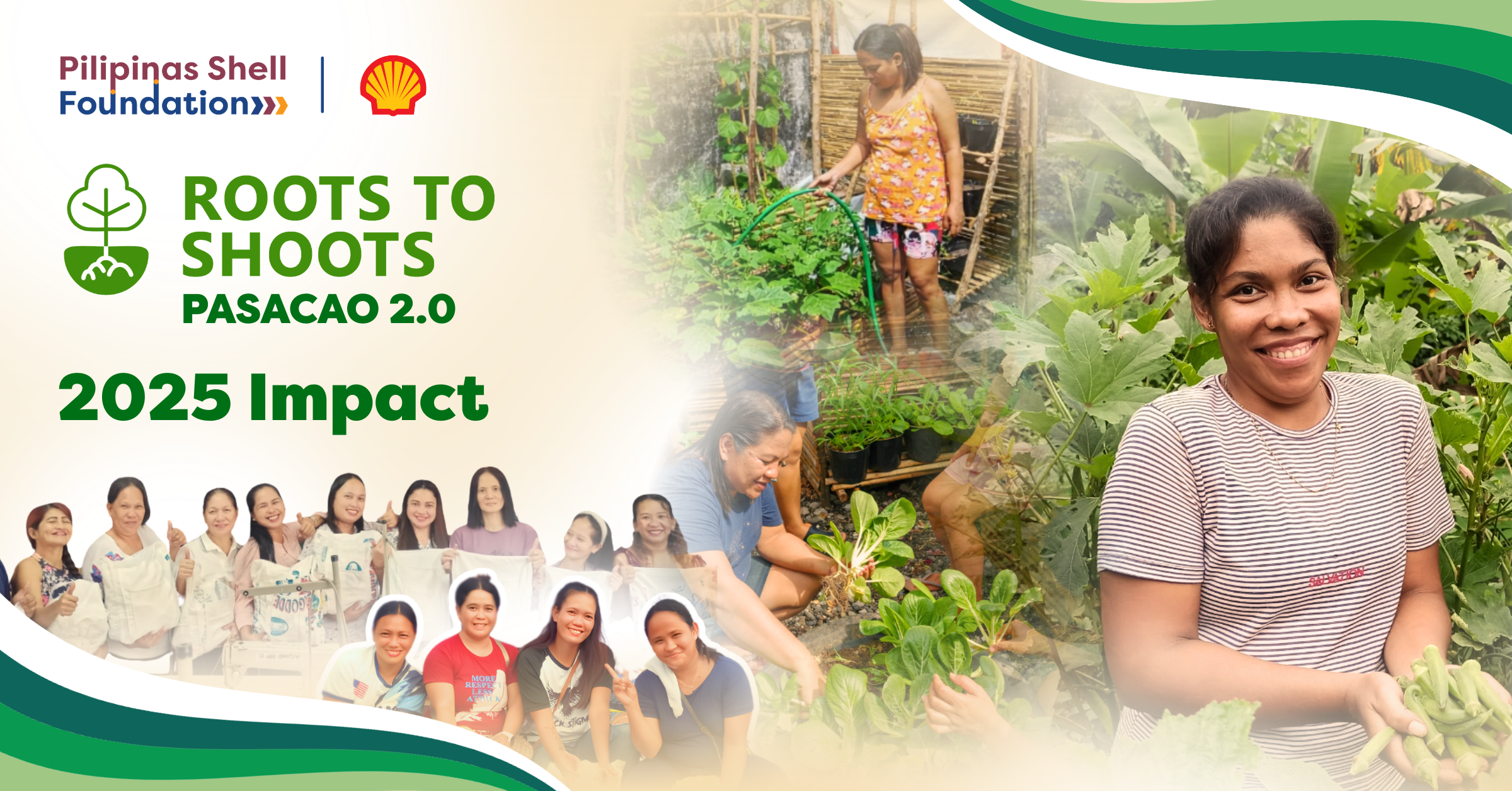
Growing What Matters: From Nutrition to Livelihood, Communities Take Root in Pasacao
Communities in Pasacao are growing more than just vegetables. Through the Roots to Shoots: Pasacao 2.0 program, families are strengthening child nutrition, building sustainable livelihoods, and learning how to produce food from their own backyards. In 2025, the program supported 50 children through nutrition rehabilitation, empowered 43 caregivers with livelihood opportunities, and trained 18 caregivers in home gardening, helping communities cultivate healthier futures and stronger resilience.
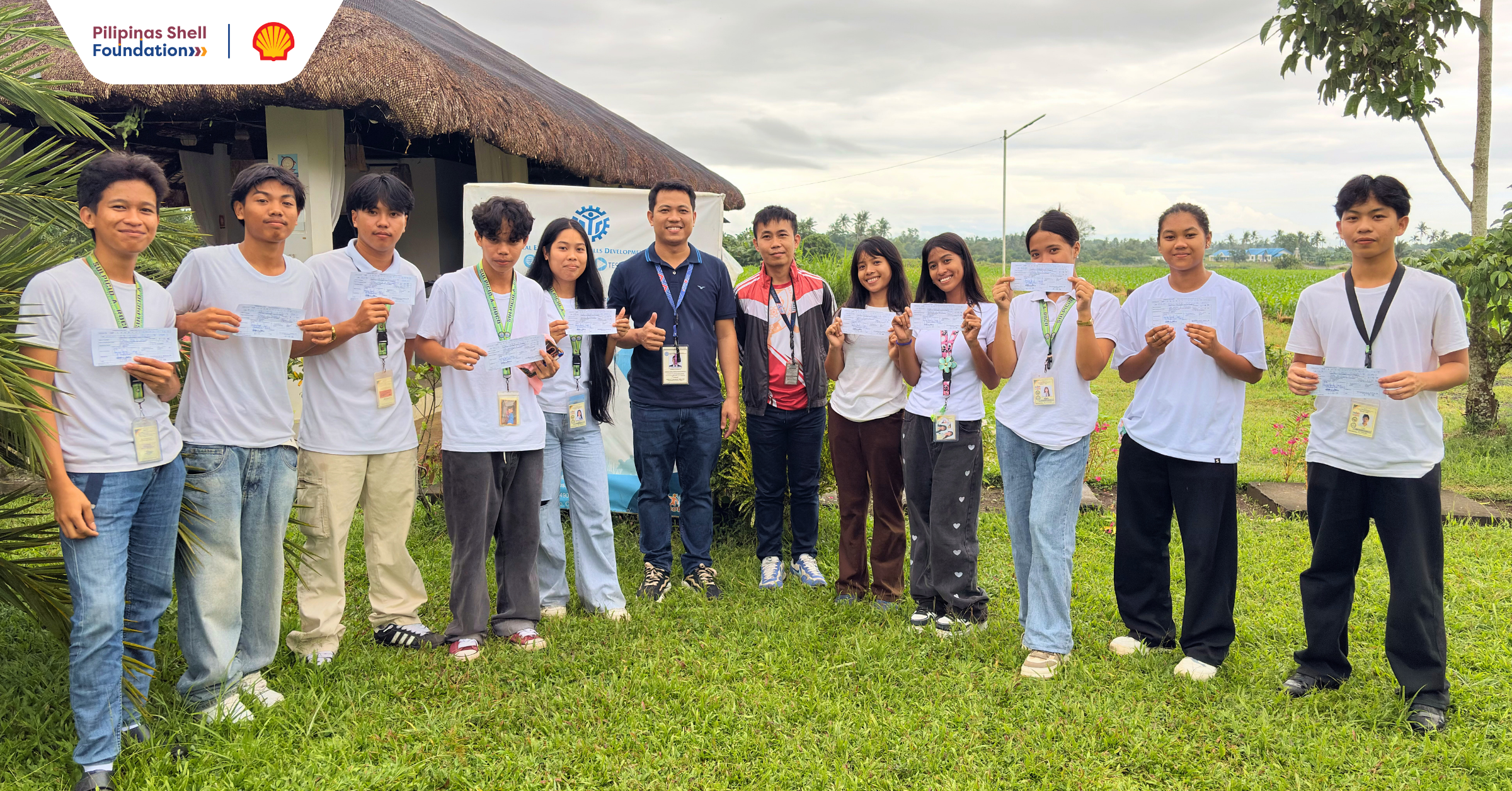
Planting Seeds for Food Security: 26 Grade 12 Learners Achieve 100% in Agricultural Crop Production NC II
Twenty-six Grade 12 learners from Sulpicio A. Roco Memorial High School achieved a 100% passing rate in the Agricultural Crop Production NC II assessment after completing 320 hours of classroom instruction and farm immersion at PSFI’s Shell Training Farm in Bombon through DepEd’s JDVP. Certified as Competent in core crop production and essential workplace and safety skills, the fourth batch of graduates is now better positioned for employment, entrepreneurship, or further studies in agriculture, supporting stronger youth participation in food security and sustainable farming.
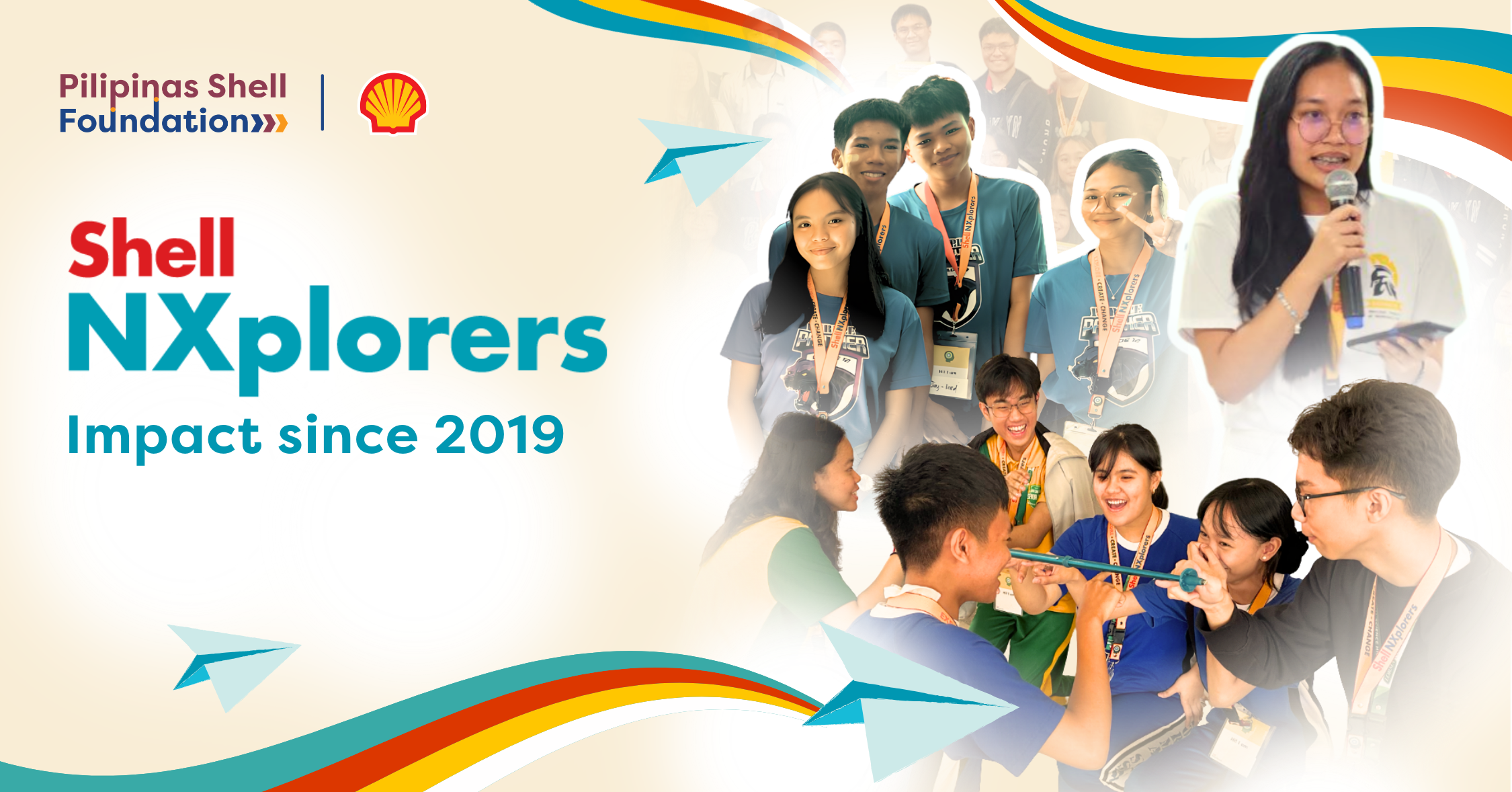
Cultivating Future-Ready Problem Solvers: PSFI Celebrates the Impact of the Shell NXplorers Program (2019–2025)
From 2019 to 2025, the Shell NXplorers Program, implemented by Pilipinas Shell Foundation, Inc., equipped 2,716 students and 421 teachers across 101 schools with the skills to tackle complex real-world challenges. Through systems thinking, scenario planning, and sustainability-driven problem solving, young Filipinos strengthened their confidence, creativity, and collaboration. With 97 student-led projects generated through the Bright Ideas Challenge, NXplorers leaves behind a generation ready to shape solutions for food, water, and energy challenges.
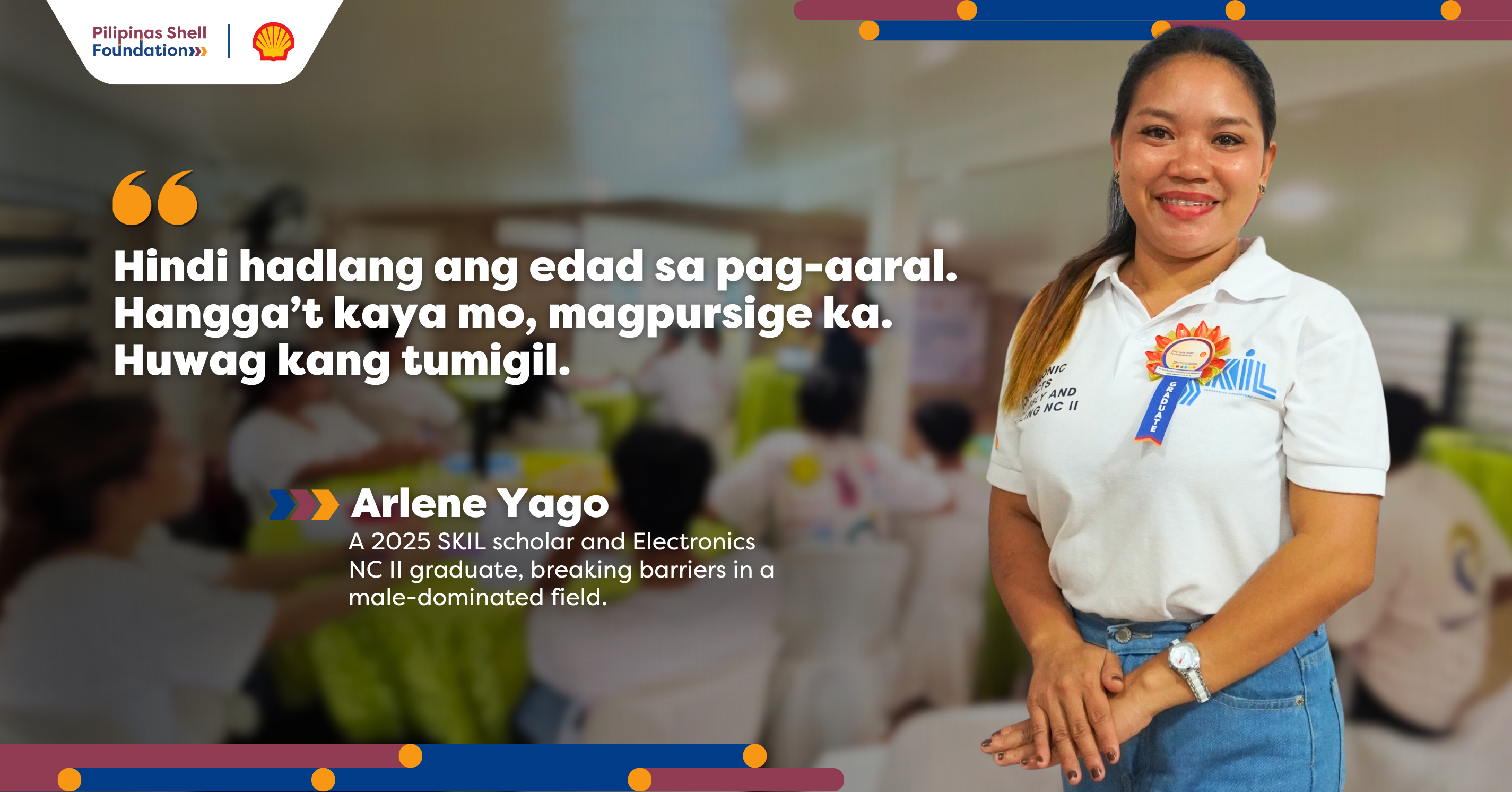
A Promise Fulfilled: Arlene Yago’s Journey as a 2025 SKIL Scholar
At 28, Arlene Yago chose to return to school, carrying with her the words her father once told her: “Mag-aral ka para sa akin.” A young mother from Pasacao, Camarines Sur, Arlene became a 2025 scholar of the Sanayan sa Kakayahang Industriyal (SKIL) program in Electronics NC II, stepping into a field she never imagined for herself.
Shortly after her training began, she lost her father. Instead of stopping, she pressed on, honoring his dream through perseverance and hard work. Today, Arlene’s journey is more than a certification earned. It is a promise fulfilled and a future steadily being built for her family.
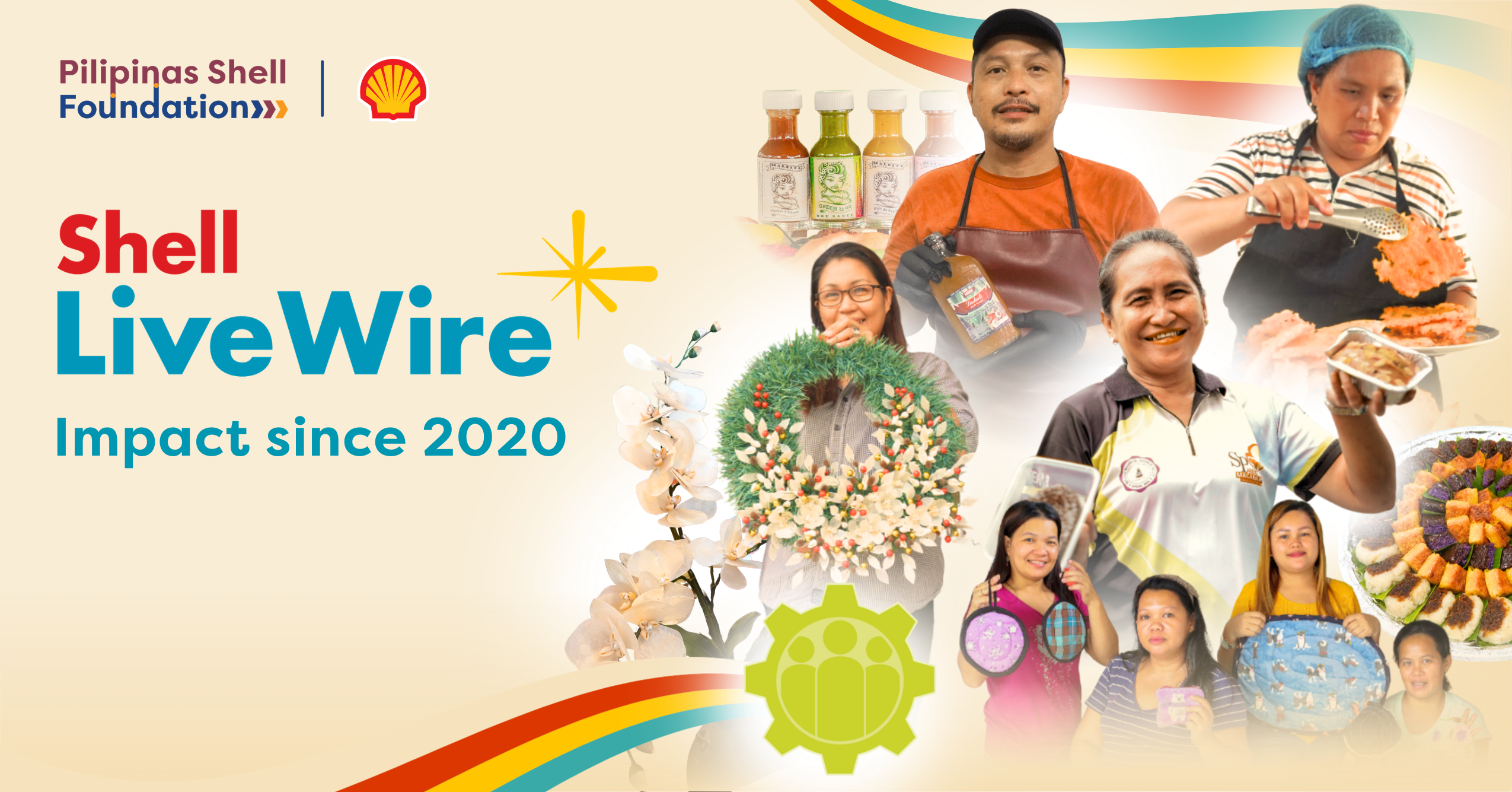
Shell LiveWire 2025: Growing Enterprises, Powering Possibilities
From 2020 to 2025, Shell LiveWire supported 157 Community Enterprises and 26 Tech Startups nationwide. In 2025 alone, the program reached 47 community enterprises, provided startup capital to 42 enterprises, and awarded equity-free grants to five tech startups across 10 sites nationwide.
Through structured training, mentorship, and partnerships with LGUs, national agencies, and innovation hubs, Shell LiveWire helps Filipino entrepreneurs strengthen livelihoods, create jobs, and develop solutions that enable communities to thrive.
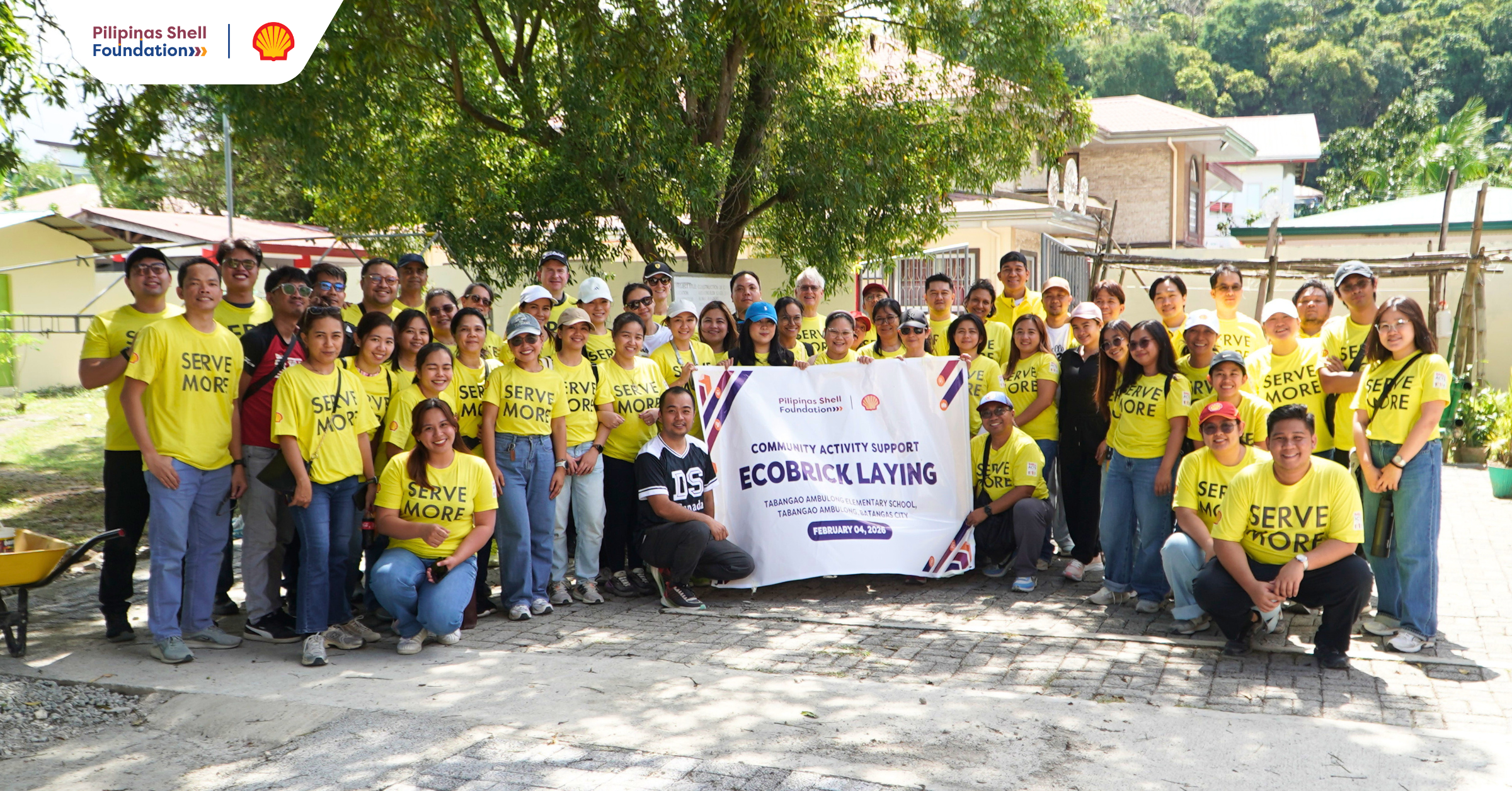
Building Better Pathways, One Ecobrick at a Time
In Batangas City, discarded plastic was transformed into safer walkways for children through an Ecobrick Laying Activity led by Pilipinas Shell Foundation, Inc. (PSFI), together with Shell Business Operations and Shell Import Facility Tabangao. With 5,000 ecobricks turned over and 57 volunteers working side by side, school pathways at Tabangao Ambulong Elementary School and San Isidro Day Care Center were strengthened—creating cleaner, safer spaces for learning and play.
The initiative forms part of PSFI’s Community Activity Support (CAS) program, which has reached over 30,000 individuals nationwide since 2023 through education, health, and environmental efforts. Read how sustainability and partnership are building better pathways for communities.