
For many young learners, agriculture is often something they read about in textbooks. Through the Joint Delivery Voucher Program (JDVP), students in Camarines Sur are experiencing it firsthand, learning how to grow food, care for the land, and develop skills that can shape their future.
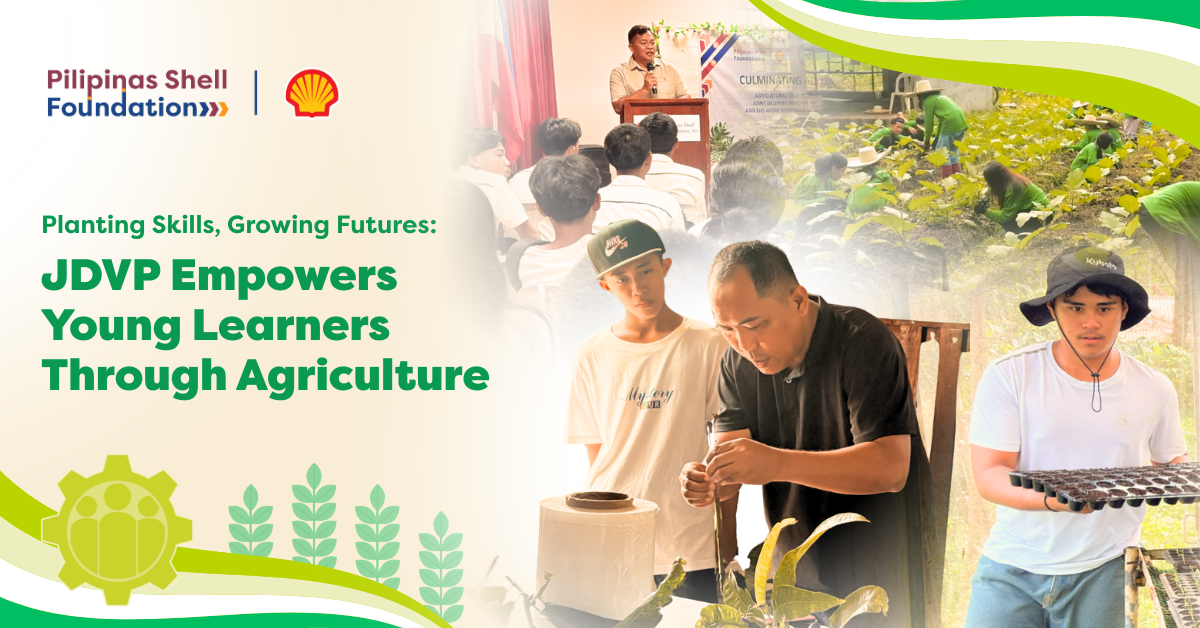
Implemented by Pilipinas Shell Foundation, Inc. (PSFI) in partnership with the Department of Education, the program brought hands-on agricultural training to Senior High School learners under the Technical-Vocational-Livelihood (TVL) track. Activities were conducted at the Shell Training Farm in Bombon and in partner schools across the province.
The program focuses on competency-based training aligned with TESDA standards, particularly in Agricultural Crop Production and Organic Agriculture Production. By combining classroom learning with practical field experience, JDVP helps bridge the gap between theory and real-world application.
This year, the program reached 96 learners across three training sites, surpassing its initial target and expanding its reach compared to previous years. Over 40 days and 320 hours of training, students learned essential agricultural practices such as soil preparation, seed selection, crop care, and organic farming methods.
Beyond the technical lessons, the experience helped learners build confidence and discover new possibilities. By the end of the program, 96 students completed the training, with 94 learners demonstrating readiness for TESDA National Certification Level II assessment.
Many students also began applying what they learned at home, starting small gardens and supporting their families’ food supply. For some, the program sparked a deeper interest in agriculture and opened new pathways for future livelihood opportunities.
One learner shared that before joining the program, they had little exposure to farming and were unsure of their abilities. Through weeks of hands-on practice and guidance, they gained the skills and confidence to grow their own crops and began seeing agriculture as a meaningful career path.
The program also reflects a broader commitment to sustainable community development. By equipping young learners with practical agricultural skills, JDVP contributes to improved employability, stronger household food security, and greater appreciation for sustainable farming practices.
With continued collaboration among PSFI, the Department of Education, and local partners, the initiative continues to grow in impact and relevance. Future efforts will focus on expanding the program to more schools, strengthening certification readiness, and deepening support for young learners interested in agriculture.
Because when young people are given the tools to grow, they do more than gain new skills.
They cultivate resilience, opportunity, and a future rooted in possibility.