Stories of inspiration

Powering the People:
PSFI inaugurates Micro-Grid Hybrid Power System in Brgy. Maytegued, Palawan

Nov 10, 2020

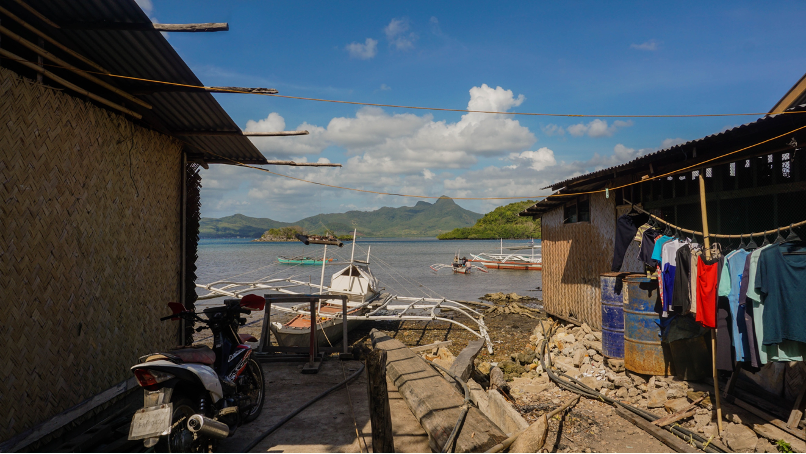
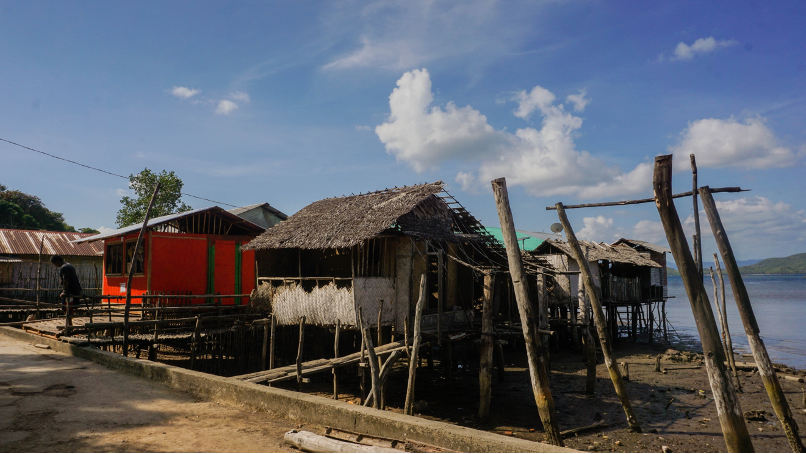
Barangay Maytegued is one of the islands of the municipality of Taytay in Palawan. It is home to about 700 people who has had no access to a stable and reliable source of energy since it’s been inhabited.

According to Florence, one of Maytegued’s community leaders, majority of its 166 households depend only on one barangay generator that provides 3-4 hours of unstable electricity at night.

“It’s definitely not enough for all of us here”, she says.

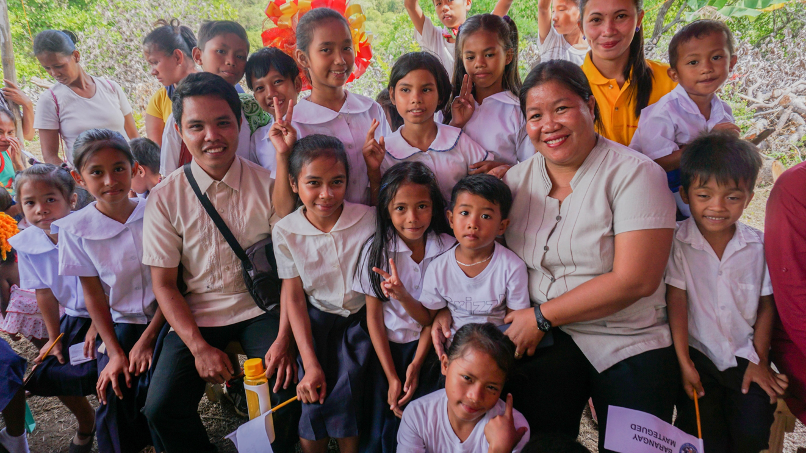
Elementary school teachers assigned in the island also share their personal accounts of challenges teaching in an off-grid school. Grade 4 teacher, Ardel, had to go through the grueling process of going back and forth to be able to charge his laptop on solar power just to be able to teach his lesson for the day, “at this grade, technology is already vital in my curriculum”. Sharing a similar sentiment, Kindergarten teacher, Jasmin, says “we felt like we had no right to push the students to stay put in classrooms or take home assignments because without lighting and ventilation, children aren’t placed in comfortable situations enough to study”. Jokingly, Jasmin says, “our electricity used to be so unstable that it seemed like we were always celebrating Christmas at night while lights kept going on and off!”

After tedious assessment processes by experts and continuous consultations with the off-grid community, Pilipinas Shell Foundation, Inc. (PSFI) found premise to explore working with Maytegued in building stronger and more sustainable socio-economic opportunities for its people, through its Access to Energy (A2E) Program.

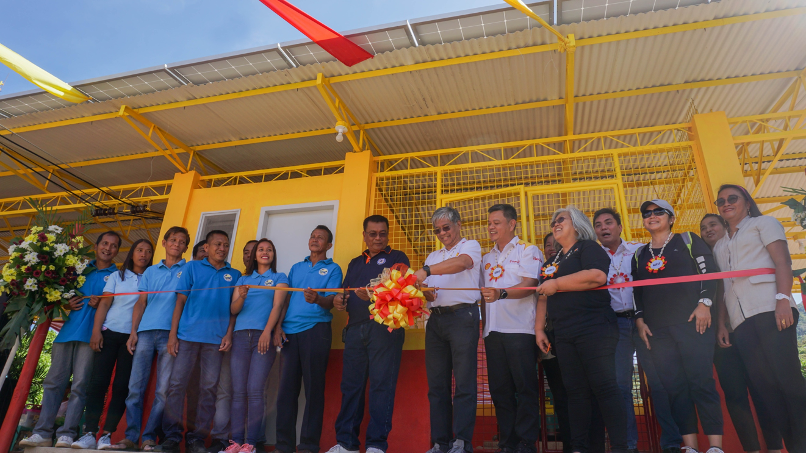
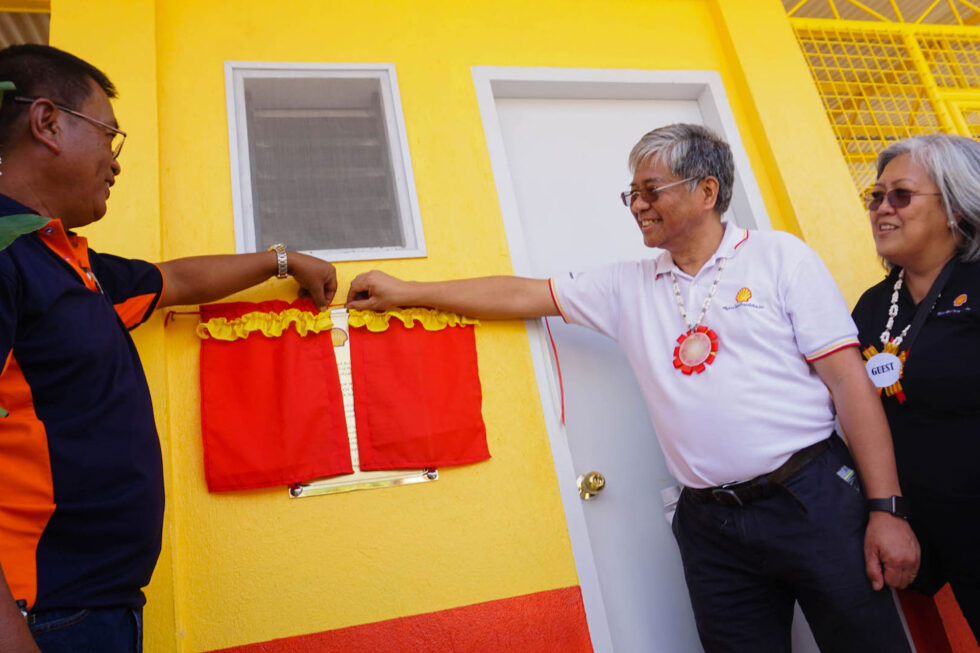
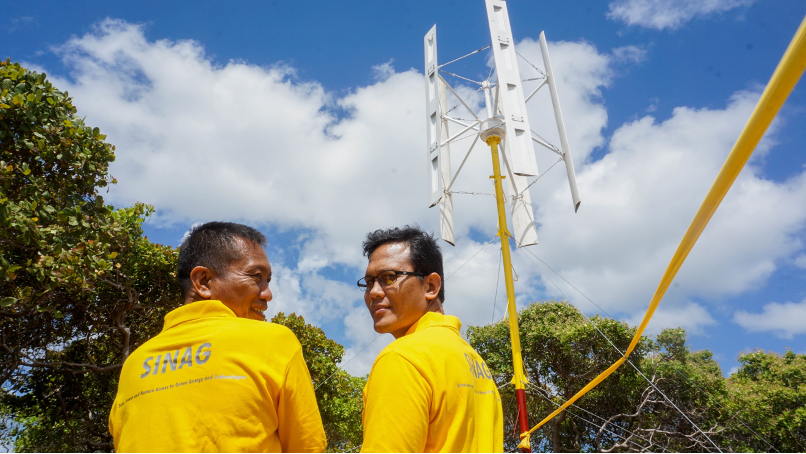
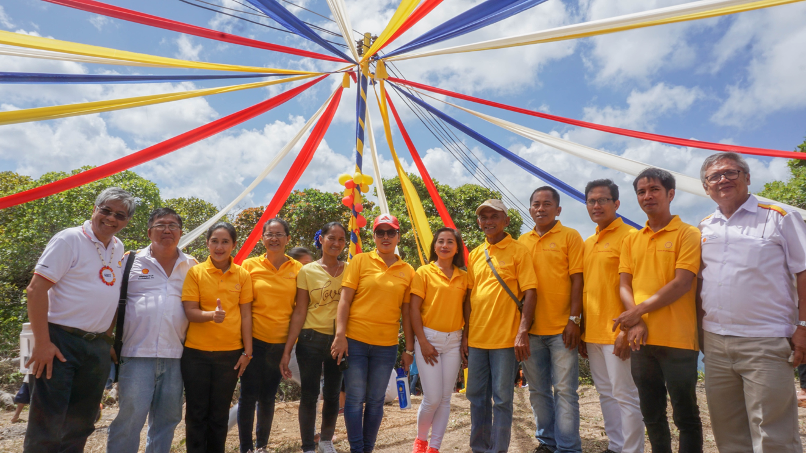
On February 4, 2020, PSFI inaugurated the Maytegued Micro-Grid Hybrid Power System, a solar and wind power system that will now serve as the community’s main source of electricity. This system is able to generate 24/7 reliable and clean energy service for the island, directly connected to 86 households, where 70 solar home systems were distributed.

The project will be directly operated by the Maytegued Electric Association, a group consisted of residents that are connected to the grid. To ensure the proper maintenance and sustainability of the system, leadership and technical trainings have been conducted, as well as continuous mentoring by professionals.

The association will be collecting membership fees and monthly payments based on the power consumption of each household, monitored through meter readings. These revenues will be allocated to the maintenance and scaling up of operations.

Today, residents of Maytegued are not only more comfortable, but are able to bring in better access to livelihood opportunities and basic education.

For teachers, simply the access to a printer has reduced their workload by a huge percent. “We used to do all our visual materials and lesson plans manually (handwritten). Now that preparations are so much easier, we are able to focus on our students more”, says Teacher Jasmin.

Reflecting on the predicament of students who travel 2-3 kilometers to school each day, teachers are pleased to know that the children are heading to classrooms where proper ventilation and lighting is available– a place where they can feel comfortable enough to learn. “We are so grateful to Pilipinas Shell Foundation, Inc. (PSFI). You have no idea how much you are helping us and the children. We promise to take care of it.”

During the inauguration, PSFI Executive Director, Sebastian Quiniones Jr., ensures the community that the organization is committed to working together with Brgy. Maytegued in moving forward, and hopes that the project will serve as their “enabler” for further developments and sustainability.

Related stories:

A Promise Fulfilled: Arlene Yago’s Journey as a 2025 SKIL Scholar

At 28, Arlene Yago chose to return to school, carrying with her the words her father once told her: “Mag-aral ka para sa akin.” A young mother from Pasacao, Camarines Sur, Arlene became a 2025 scholar of the Sanayan sa Kakayahang Industriyal (SKIL) program in Electronics NC II, stepping into a field she never imagined for herself.

Shortly after her training began, she lost her father. Instead of stopping, she pressed on, honoring his dream through perseverance and hard work. Today, Arlene’s journey is more than a certification earned. It is a promise fulfilled and a future steadily being built for her family.

Shell LiveWire 2025: Growing Enterprises, Powering Possibilities

From 2020 to 2025, Shell LiveWire supported 157 Community Enterprises and 26 Tech Startups nationwide. In 2025 alone, the program reached 47 community enterprises, provided startup capital to 42 enterprises, and awarded equity-free grants to five tech startups across 10 sites nationwide.

Through structured training, mentorship, and partnerships with LGUs, national agencies, and innovation hubs, Shell LiveWire helps Filipino entrepreneurs strengthen livelihoods, create jobs, and develop solutions that enable communities to thrive.

Building Better Pathways, One Ecobrick at a Time

In Batangas City, discarded plastic was transformed into safer walkways for children through an Ecobrick Laying Activity led by Pilipinas Shell Foundation, Inc. (PSFI), together with Shell Business Operations and Shell Import Facility Tabangao. With 5,000 ecobricks turned over and 57 volunteers working side by side, school pathways at Tabangao Ambulong Elementary School and San Isidro Day Care Center were strengthened—creating cleaner, safer spaces for learning and play.

The initiative forms part of PSFI’s Community Activity Support (CAS) program, which has reached over 30,000 individuals nationwide since 2023 through education, health, and environmental efforts. Read how sustainability and partnership are building better pathways for communities.

Nourishing Young Lives: Thaison Volunteers Bring Care and Nutrition to RTS Light in Mabalacat City

On January 27, 2026, the Family Care Center in Marcos Village, Mabalacat City, became a space of shared care and learning through the Roots to Shoots (RTS) Light Program. Pilipinas Shell Foundation, Inc. (PSFI), with the support of Thaison Builders and Developer, Inc. (TBDI), Clark Development Corporation, Barangay Nutrition and Health Workers, FCC teachers, and parent volunteers, conducted a nutrition-focused feeding activity for 25 pre-school children.

Building on hands-on volunteerism, TBDI staff helped prepare and serve nutrient-rich meals, then led a storytelling session that reinforced positive values and healthy habits. The activity also strengthened parental awareness through short, interactive nutrition education led by health workers, reflecting RTS Light’s goal of nourishing children while deepening community participation and ownership.

From Sidelines to Systems: How a USP Scholar Rewrote His Code for Success

What started as freelance computer repairs arranged through Facebook has evolved into a registered tech enterprise for John Joshua Boyore of Angono, Rizal. Through Unlad Sa Pasada (USP) of Pilipinas Shell Foundation, Inc., and with the support of the Benita and Catalino Yap Foundation (BCYF), John gained not only financial assistance but structured entrepreneurial training that transformed his mindset, formalized his operations, and strengthened his long-term vision.

From reactive hustle to strategic growth, his journey shows how access to education and business discipline can turn technical skill into sustainable opportunity.

Growing Health, Growing Hope: Roots to Shoots Deepens Impact in Aeta Communities

Since 2023, the Roots to Shoots Program has strengthened Aeta communities in Bamban, Tarlac and Mabalacat City, Pampanga through integrated support in child nutrition, food security, livelihood development, and water access.

As of 2025, more than 2,000 individuals have been reached, with measurable gains in nutrition recovery, farmer training, enterprise development, and the construction of a community-managed water system.

Now in its second year, Roots to Shoots continues to demonstrate that healthier children thrive when households are economically stable and communities are supported by strong, sustainable systems.