Stories of inspiration

Shell Philippines and JNJ Industries’ ‘Project COCONUT’ launches its first COCO Hub in Unisan, Quezon

May 3, 2019

In Philippine agriculture, the coconut industry is known to be one of the most dominant across many farming sectors. According to the Philippine Coconut Authority (PCA), of the country’s 12 million hectare farmlands, 3.1 million is devoted to coconuts; not to mention, 68 out of the 79 provinces are coconut areas. These numbers do not only prove the supposed infallibility of the industry, but it also shows how countless families depend on this as their main source of income.

Unfortunately, recent data indicates that the average farm-gate price of copra has decreased by almost 60% in the last year, from P38.50 to P15.52 per kilo (PCA, December 2018). This has caused triple the struggles to make ends meet for millions of coconut farmers and their families. Not only is it difficult for them to fasten up the planting and harvesting process (each tree only bares 40-120 nuts per year, depending on the type of seed planted), but they are grappling to find ways to trade them for reasonable costs too.

With the intention of finding sustainable livelihood methods for various communities all over the country, Pilipinas Shell Petroleum Corporation (PSPC), through its social arm, Pilipinas Shell Foundation Inc. (PSFI), and in partnership with JNJ Oil Industries Inc., launched Project COCONUT last November 2018.

The COllaboration for COconut Productivity and NUrturing Farmers’ Trade (COCONUT) Sustainable Livelihood Program, or Project COCONUT, is an initiative to work with farmers in improving their lives through the increase of their income. Since its launch late last year, the program has already established a cooperative and has conducted a series of trainings in farm management and innovative income opportunities using different coconut processing methods.

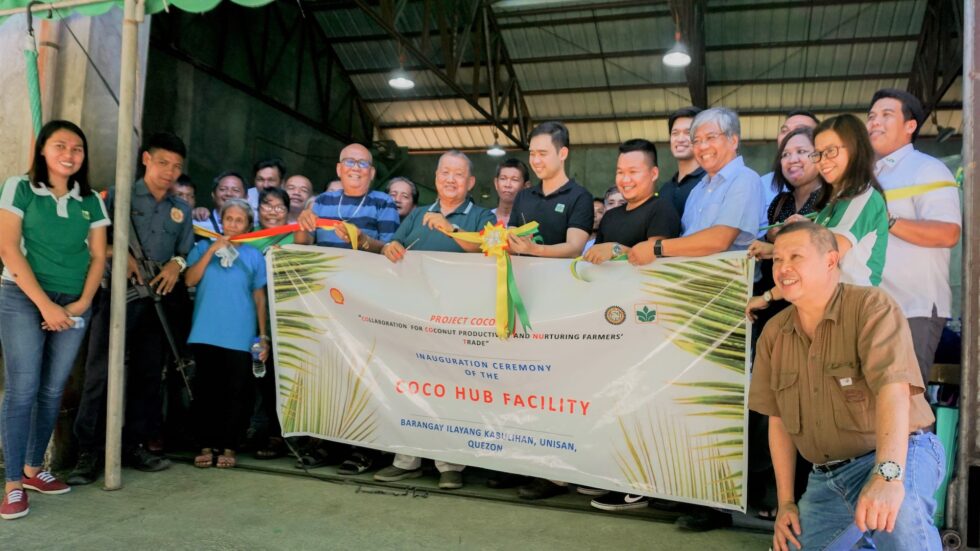
As part of its advancements, Project COCONUT launched its first ever COCO Hub Facility in Ilayang Kabulihan, Unisan, Quezon on April 22, 2019. The COCO Hub Facility serves as the farming community’s venue to process coconuts into more profitable material. PSPC, JNJ Industries, PCA and the local farming cooperative commits themselves to the 3-year program (and beyond) and expresses their positive anticipation for its results.

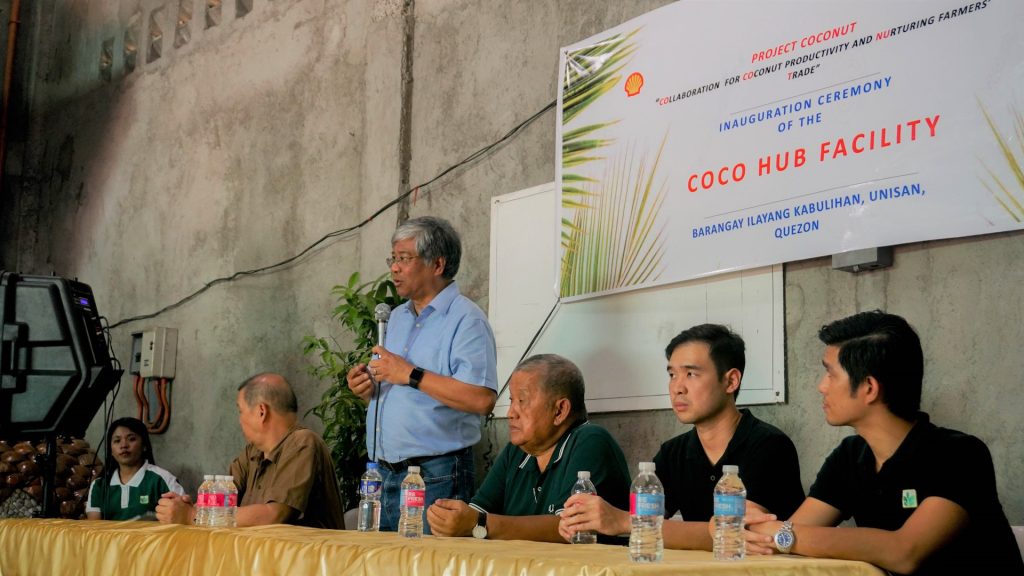
During the inauguration, PSFI Executive Director Sebastian Quiniones emphasizes on the collaboration between the various entities as key to the projects’ success. He ensures the farmers that the foundation is truly dedicated to the partnership, “Ang partners ay andito para tumulong, at patuloy namin susubukan na makatulong gumawa ng dagdag pang mga programa. Patuloy nating pagaaralan sama-sama ang mga pangangailangan at kalakasan ninyo, kasi ang gusto namin ay sa tuwing pumapasok ang PSFI sa isang komunidad, hindi lamang kami dumadating at umaalis. Naniniwala kami na dapat magkakasama natin tinatahak ito.” (The partners are here to help, and we will continue to try helping through the creation of more programs. We will continue to study the needs and strengths of your community together, because what we want is for PSFI to not only come and go from communities. We believe that we should take on this together.)

JNJ Oil Industries VP for Sales and Marketing, Ryan Jervis Jao, tells the story of how their company came up with the idea of making Project COCONUT their CSR project a couple of years ago, “Ang industriyang ito ay parang bahay na nangangailangan ng matibay na pundasyon, at para sa amin, ang pundasyon na ito ay kayo– ang farmers. At upang mas pagtibayan pa ito, sa inyo kami direktang makikipagtrabaho.” (This industry is like a house that needs a strong foundation, and for us, this foundation is you– the farmers. And to further strengthen this, we want to work with you.) He also goes on to say that his team believes in the farmers and this project greatly that they are not only committing to the first 3 years of its implementation, but they are pledging to continue the collaboration way beyond.

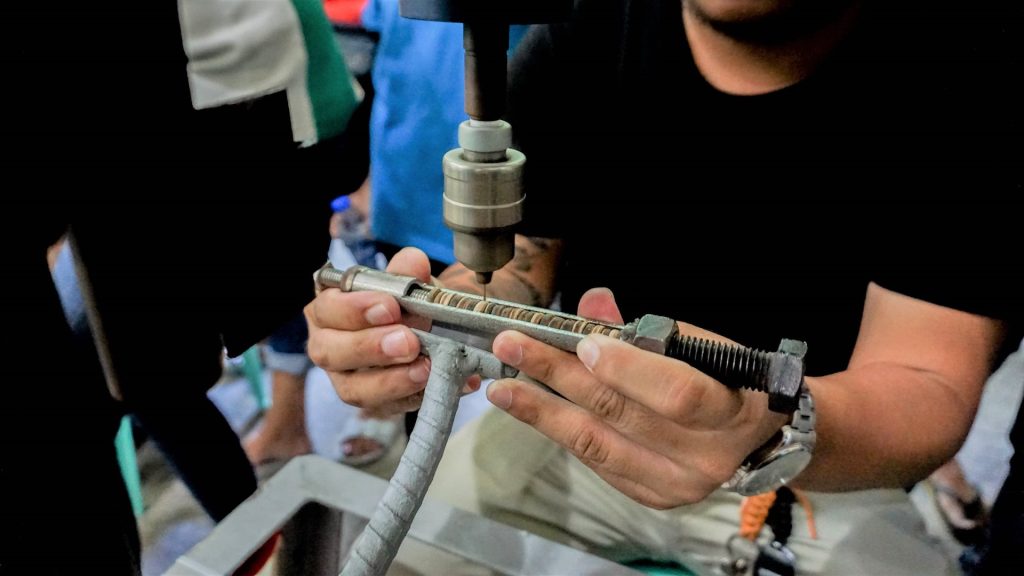
As part of the launching program, the farmers were given the chance to take a quick look and feel of their new income-generating facilities. JNJ workers did a quick sample of the use of the first four (4) machines that produced coconut beads for jewelry as the farmers eagerly watched and tried these out. Trainings and discussions on the production and trade of the beads are to be conducted subsequent to the inauguration.

Farmers of Unisan, Quezon showed their enthusiasm for this new way of earning income and continuously thank their partners for the support. Ray John Belleza, the Chairman of Unisan Atimonan Cocofarmers Cooperative shared the process of being able to reach this point of accomplishment as a community, “Magkakaiba po ang response ng mga farmers dito, dahil syempre yung iba ay nanggaling na sa ibang cooperative at nabigo lang. Pero positibo po talaga ang tingin namin sa project na ito dahil tinutulungan po kami ng LGU, ng Shell at ng JNJ ng 100%.” (Farmers have different responses because of course, some already came from cooperatives that only failed. But we are truly positive about this new project because the LGU, Shell and JNJ helps us 100%).

Sources:

Related stories:

Chasing Zero: How PSFI and Partners are Turning the Tide Against Malaria

As the Philippines moves closer to eliminating malaria, a focused push in Palawan is driving the country’s final mile toward zero cases. Through the Global Fund Movement Against Malaria program, implemented by Pilipinas Shell Foundation, Inc. (PSFI) with national and local partners, significant gains have been achieved, including a 78% drop in indigenous cases in 2025 and zero reported deaths.

With 74 out of 82 provinces now malaria free, efforts are concentrated on reaching remote and underserved communities through targeted testing, treatment, and prevention strategies. Backed by strong partnerships and community driven approaches, the country is on track to achieve zero malaria in Palawan by 2026 and nationwide elimination by 2030.

BiyaHERO: PSFI Strengthens Road Safety Awareness Among Young Learners in Cagayan de Oro

PSFI, together with Shell Pilipinas Corporation and the Roads and Traffic Administration, strengthened road safety awareness among young learners in Cagayan de Oro through its BiyaHERO program. Through hands-on simulations and real-world learning tools, 64 students and teachers gained practical skills to navigate roads safely, reinforcing the importance of early education in building safer communities.

Strengthening Foundations Through Partnership: PSFI at the STEM Kapihan Panel

Pilipinas Shell Foundation, Inc. (PSFI) joined industry and education leaders at the STEM Kapihan Panel to address urgent challenges in the Philippine education system. Highlighting the need to strengthen foundational learning, Executive Director Sebastian C. Quiniones Jr. emphasized the role of industry as a co-educator in shaping more relevant and effective learning experiences. Read the full story to learn how partnerships can help strengthen both learners and teachers.

Growing Dignity: How PWDs in Tagbilaran Cultivated Livelihood Through Urban Gardening

In Tagbilaran City, persons with disabilities are transforming small urban spaces into sources of food, income, and empowerment. Through container gardening and vermicast production, the Association of Persons with Disability Workers is building sustainable livelihoods rooted in self-reliance, skills development, and dignity, proving that with the right support, communities can grow stronger from within.